
lumbar canal stenosis exercises pdf
Understanding Lumbar Spinal Stenosis
Lumbar spinal stenosis frequently impacts individuals‚ causing pain; it’s a narrowing of spaces within the spine‚ potentially compressing nerves.
The lumbar spine‚ consisting of vertebrae L1-L5‚ supports weight and allows flexibility‚ but can be prone to wear and tear.
Radiculopathy‚ affecting 3-5% of the population‚ often necessitates evaluation by a spine surgeon due to its commonality and impact.

What is Lumbar Spinal Stenosis?
Lumbar spinal stenosis represents a narrowing of the spinal canal in the lower back. This constriction can exert pressure on the spinal cord and nerves‚ leading to a range of debilitating symptoms. The lumbar spine‚ comprised of five vertebrae (L1-L5)‚ is crucial for supporting body weight and enabling flexible movement‚ but it’s also susceptible to age-related changes and injuries.
This narrowing isn’t always present from birth; it often develops over time due to degenerative conditions like osteoarthritis. As we age‚ ligaments can thicken‚ bone spurs may form‚ and discs can bulge or herniate‚ all contributing to the reduction of space within the spinal canal. Consequently‚ this compression can cause pain‚ numbness‚ and weakness in the legs and feet – symptoms characteristic of lumbar radiculopathy‚ a common complaint evaluated by spine surgeons‚ affecting roughly 3-5% of the population.
Causes and Risk Factors
Several factors contribute to the development of lumbar spinal stenosis. The most prevalent cause is osteoarthritis‚ leading to degenerative changes within the spine. These changes include the thickening of ligaments‚ the formation of bone spurs‚ and the bulging or herniation of intervertebral discs – all narrowing the spinal canal.
Age is a significant risk factor‚ as these degenerative processes naturally occur over time. Prior spinal injuries‚ such as fractures or dislocations‚ can also increase susceptibility. Furthermore‚ individuals with a family history of spinal stenosis may be at a higher risk. The lumbar region‚ bearing substantial body weight‚ is particularly vulnerable to wear and tear‚ impacting its flexibility and potentially leading to nerve compression‚ a common issue evaluated by spine specialists.
Exercises for Lumbar Spinal Stenosis ౼ A Comprehensive Guide
Targeted exercises can alleviate lumbar spinal stenosis symptoms by strengthening core muscles‚ improving flexibility‚ and promoting nerve health‚ aiding in pain management.
Core Strengthening Exercises
A robust core is fundamental for spinal stability and pain reduction in lumbar spinal stenosis. These exercises focus on strengthening the abdominal and back muscles‚ providing support and improving posture. Consistent core work helps to counteract the stresses placed on the lower back.
Strengthening these muscles doesn’t directly decompress the spinal canal‚ but it enhances the body’s ability to manage pain and maintain proper biomechanics. A strong core minimizes strain on the affected area‚ potentially reducing nerve compression symptoms. Remember to perform these exercises with controlled movements and proper form to maximize benefits and prevent injury.
Focus on engaging the deep abdominal muscles throughout each exercise‚ rather than relying on superficial movements. This ensures effective core activation and optimal support for the lumbar spine.
Pelvic Tilts
Pelvic tilts are a gentle yet effective exercise for initiating core engagement and improving lumbar spine mobility. Lie on your back with knees bent and feet flat on the floor. Gently flatten your lower back against the floor by tightening your abdominal muscles and tilting your pelvis upward.
Hold this position for a few seconds‚ then relax and allow a small natural arch to return to your lower back. Repeat this movement 10-15 times; This exercise helps to strengthen the abdominal muscles and improve awareness of pelvic positioning‚ crucial for maintaining a neutral spine.
Focus on slow‚ controlled movements‚ avoiding any jerking or straining.
Abdominal Bracing
Abdominal bracing is a core stabilization exercise that doesn’t involve movement‚ but focuses on activating the deep abdominal muscles. Imagine preparing to receive a light punch to the stomach – that’s the feeling you want to achieve. Gently tighten your abdominal muscles as if bracing for impact‚ without holding your breath or excessively squeezing.
Maintain normal breathing throughout the exercise. You should feel a subtle tightening across your abdomen‚ like a corset gently hugging your torso. Hold this contraction for 5-10 seconds‚ then release.
Repeat 10-15 times. This exercise enhances spinal stability and protects the lower back during activity.
Flexion-Based Exercises
Flexion-based exercises aim to create more space within the spinal canal by gently bending forward. These movements can provide temporary relief for some individuals with lumbar spinal stenosis‚ though individual responses vary. It’s crucial to perform these exercises cautiously and stop if pain increases.
These exercises often involve rounding the back‚ which widens the spaces between vertebrae. However‚ not everyone benefits from flexion‚ and some may experience worsened symptoms. Careful self-assessment and professional guidance are essential.
Examples include knee-to-chest stretches and the cat-cow stretch‚ promoting gentle spinal mobility and potentially reducing nerve compression.
Knee-to-Chest Stretches
Knee-to-chest stretches are a foundational flexion-based exercise for lumbar spinal stenosis‚ gently decompressing the lower back. Begin by lying on your back with knees bent and feet flat on the floor. Slowly bring one knee towards your chest‚ holding it with your hands.
Maintain a relaxed back and avoid pulling forcefully. Hold the stretch for 20-30 seconds‚ then slowly lower your leg. Repeat with the other leg‚ and then with both knees simultaneously if comfortable.
This exercise aims to create space within the spinal canal‚ potentially alleviating nerve compression. However‚ listen to your body and stop if you experience increased pain or discomfort.
Cat-Cow Stretch
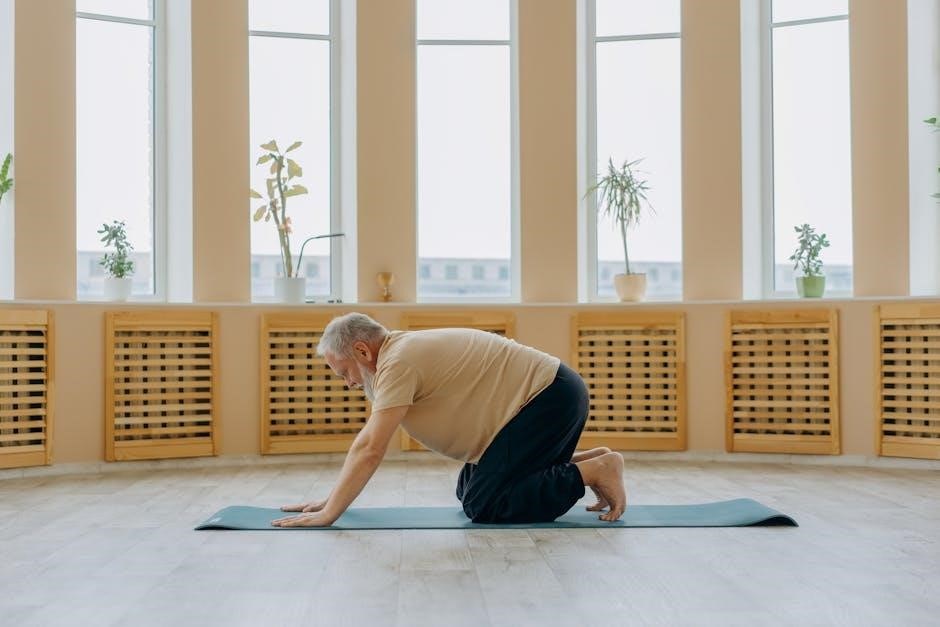
The Cat-Cow stretch is a gentle‚ flowing movement that enhances spinal mobility and can be beneficial for those with lumbar spinal stenosis. Begin on your hands and knees‚ ensuring your hands are shoulder-width apart and knees are hip-width apart.
Inhale as you drop your belly towards the floor‚ arching your back and lifting your head and tailbone (Cow pose). Exhale as you round your spine towards the ceiling‚ tucking your chin to your chest (Cat pose).
Continue alternating between these two poses for 10-15 repetitions‚ coordinating your breath with each movement. This exercise promotes flexibility and can help relieve stiffness in the lower back.
Extension-Based Exercises (Caution Advised)
Extension-based exercises‚ while potentially helpful‚ require caution for individuals with lumbar spinal stenosis as they can exacerbate symptoms in some cases. These movements involve bending backward‚ which can further narrow the spinal canal.
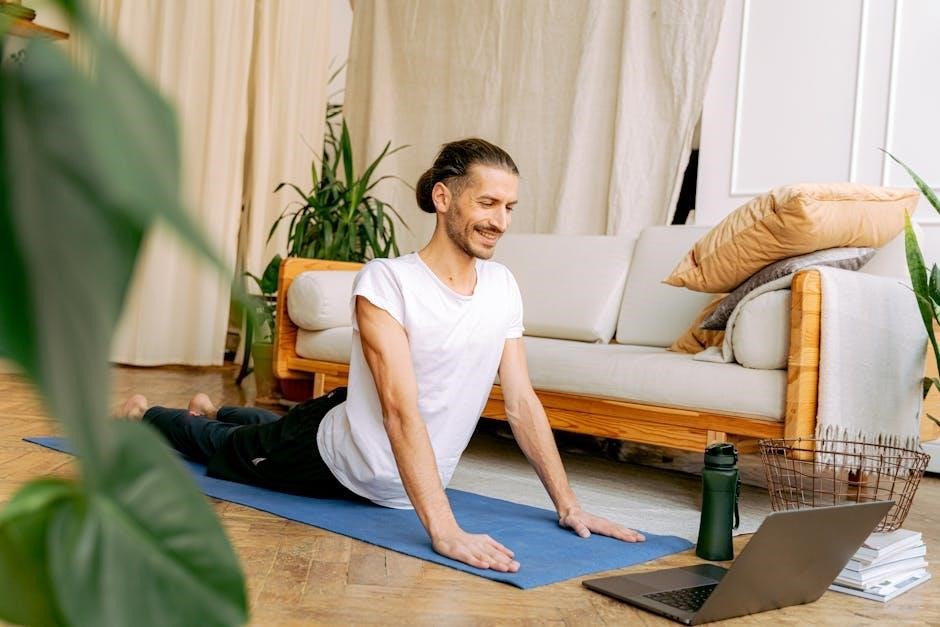
Prone Press-Ups involve lying face down and gently lifting your upper body using your arms‚ maintaining a small range of motion. Standing Back Extensions‚ modified to avoid excessive bending‚ can also be considered.
It’s crucial to listen to your body and stop immediately if you experience increased pain‚ numbness‚ or weakness. Consulting a healthcare professional before attempting these exercises is highly recommended to determine suitability.
Prone Press-Ups (Gentle Range of Motion)
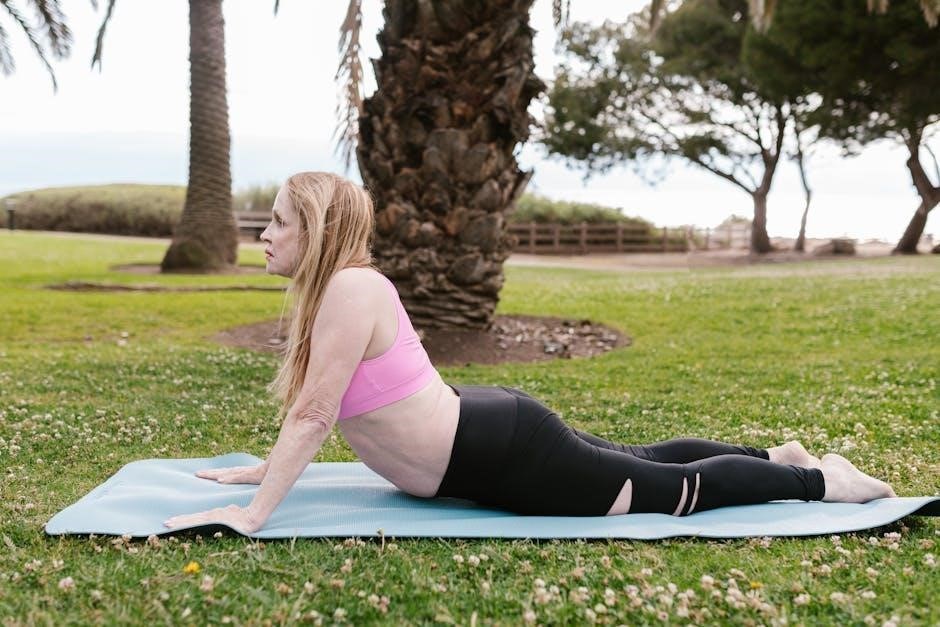
Prone Press-Ups are performed by lying face down with your hands positioned under your shoulders‚ similar to a push-up starting position. The key is to maintain a gentle range of motion‚ slowly lifting your upper body a few inches off the floor.
Avoid arching your back excessively; focus on using your back muscles to lift‚ keeping your core engaged. This exercise aims to promote extension in the lumbar spine‚ but should be performed cautiously.
Stop immediately if you experience any increased pain‚ numbness‚ or radiating symptoms down your legs. Controlled movements are vital‚ and a small lift is preferable to a large‚ painful one.
Standing Back Extensions (Modified)
Standing Back Extensions (Modified) involve a controlled backward bend while standing‚ offering a gentle lumbar extension. Place your hands on your lower back for support‚ and slowly lean backward‚ keeping your knees slightly bent.
Avoid hyperextending or forcing the movement; the goal is a small‚ comfortable range of motion. This modified version minimizes stress on the spine compared to traditional back extensions.
Individuals with lumbar stenosis should proceed with caution‚ as extension-based exercises can sometimes exacerbate symptoms. Listen to your body and stop if you feel any pain or nerve irritation.
Nerve Gliding Exercises
Nerve gliding exercises aim to improve the mobility of nerves that may be compressed due to lumbar spinal stenosis. These movements gently encourage nerves to slide within their surrounding tissues‚ reducing irritation and improving function.
Two common nerve glides target the sciatic and femoral nerves. The sciatic nerve glide‚ often performed seated‚ involves specific leg and foot movements. The femoral nerve glide‚ done supine‚ utilizes similar principles.
These exercises aren’t stretches; they’re about mobilizing the nerves themselves. Perform them slowly and deliberately‚ stopping immediately if you experience increased pain or neurological symptoms.
Sciatic Nerve Glide (Seated)
To perform the seated sciatic nerve glide‚ begin by sitting upright with good posture. Extend one leg straight out in front of you‚ heel on the floor. Simultaneously‚ point your toes towards your shin and gently bend your head forward‚ tilting your chin towards your chest.
Next‚ straighten your knee‚ point your toes down‚ and return your head to a neutral position. Repeat this sequence 10-15 times‚ focusing on smooth‚ controlled movements.
This exercise aims to mobilize the sciatic nerve‚ reducing compression and alleviating symptoms. Remember to stop if you experience increased pain or discomfort‚ and consult a healthcare professional for guidance.
Femoral Nerve Glide (Supine)
Begin the femoral nerve glide lying on your back with both legs extended. Gently bend the affected knee‚ bringing your heel towards your buttocks. Simultaneously‚ extend the opposite leg straight and point your toes towards the ceiling.
Next‚ straighten the bent leg while simultaneously bending the previously extended leg‚ bringing its heel towards your buttocks. Repeat this alternating leg movement 10-15 times‚ maintaining a controlled pace.
This exercise helps to mobilize the femoral nerve‚ potentially reducing pain and improving nerve function. Stop immediately if you feel increased discomfort‚ and seek professional advice.
Important Considerations Before Starting Exercises
Prior consultation with a healthcare professional is crucial before beginning any exercise program for lumbar stenosis‚ ensuring safety and personalization.
Proper form prevents injury‚ while listening to your body’s signals manages pain effectively during rehabilitation.
Consultation with a Healthcare Professional
Before initiating any exercise regimen for lumbar spinal stenosis‚ a thorough consultation with a qualified healthcare professional – such as a physician‚ physical therapist‚ or spine specialist – is absolutely paramount. This initial assessment allows for an accurate diagnosis‚ confirming the presence and severity of the stenosis‚ and ruling out any contraindications to exercise.
A healthcare provider can tailor an exercise program specifically to your individual needs‚ considering your overall health‚ fitness level‚ and the unique characteristics of your condition. They will evaluate your pain levels‚ neurological symptoms‚ and functional limitations to design a safe and effective plan.
Furthermore‚ they can provide guidance on proper form and technique‚ minimizing the risk of exacerbating your symptoms or causing further injury. Don’t self-diagnose or rely solely on online resources; professional guidance is essential for optimal outcomes.
Proper Form and Technique
Maintaining impeccable form and technique during each exercise is non-negotiable when addressing lumbar spinal stenosis. Incorrect movements can not only diminish the benefits of the exercise but also potentially worsen your condition‚ increasing pain and nerve compression. Focus on controlled‚ deliberate motions‚ avoiding any sudden or jerky movements.
Engage your core muscles throughout each exercise to stabilize your spine and protect it from excessive stress. Pay close attention to your body’s alignment‚ ensuring your back remains neutral and avoiding excessive bending‚ twisting‚ or arching.
If you are unsure about the correct form‚ seek guidance from a physical therapist or qualified healthcare professional. They can provide personalized instruction and feedback to ensure you are performing the exercises safely and effectively.
Listening to Your Body ⎼ Pain Management
Prioritizing your body’s signals is paramount when undertaking exercises for lumbar spinal stenosis. Discomfort is expected‚ but sharp‚ radiating‚ or increasing pain is a definitive stop signal. Never “push through” pain‚ as this can exacerbate nerve compression and inflammation‚ potentially worsening your symptoms.
Mild muscle soreness is acceptable‚ but it should subside within 24-48 hours. If pain persists or intensifies‚ modify the exercise or discontinue it altogether. Pay attention to any numbness‚ tingling‚ or weakness in your legs or feet‚ as these could indicate nerve irritation.
Communicate openly with your healthcare provider about your pain levels and any new symptoms that arise during exercise. They can help you adjust your program accordingly.
Modifications and Progression
Exercise adjustments are crucial; start slowly‚ adapting to your fitness level‚ and gradually increase intensity and duration as tolerated‚ avoiding overexertion.
Adapting Exercises to Your Fitness Level
Individualized exercise plans are paramount when addressing lumbar spinal stenosis. Begin with a foundational assessment of your current physical capabilities‚ honestly evaluating your strength‚ flexibility‚ and pain tolerance. If you are new to exercise‚ or have been inactive for a prolonged period‚ initiate with very gentle movements and a reduced range of motion.
Focus on mastering proper form before increasing repetitions or adding resistance. Modifications might include performing exercises seated instead of standing‚ or reducing the depth of stretches. Listen attentively to your body; any sharp or radiating pain signals a need to immediately stop and adjust the exercise. Prioritize consistency over intensity‚ aiming for short‚ frequent sessions rather than infrequent‚ strenuous workouts.
Remember‚ the goal is to improve function and reduce pain‚ not to push through discomfort.
Gradually Increasing Intensity and Duration
Progressive overload is key to building strength and endurance while managing lumbar spinal stenosis. Once you can comfortably perform exercises with proper form‚ incrementally increase the challenge. This could involve adding repetitions‚ sets‚ or resistance – using light weights or resistance bands.
Extend the duration of each exercise session slowly‚ adding just a few minutes each week. Avoid sudden jumps in intensity‚ as this can exacerbate pain and potentially cause injury. Monitor your body’s response closely‚ and be prepared to scale back if needed. Consistency is more valuable than rapid progression.
Remember‚ small‚ sustainable improvements over time yield the most significant long-term benefits.
Resources for Further Information (PDF Downloads)
Numerous online resources offer downloadable PDF guides detailing exercises for lumbar stenosis‚ aiding in self-management and rehabilitation programs.
Reliable websites provide structured exercise plans‚ promoting safe and effective movement strategies for pain relief and improved function.

Reliable Websites for Lumbar Stenosis Exercises
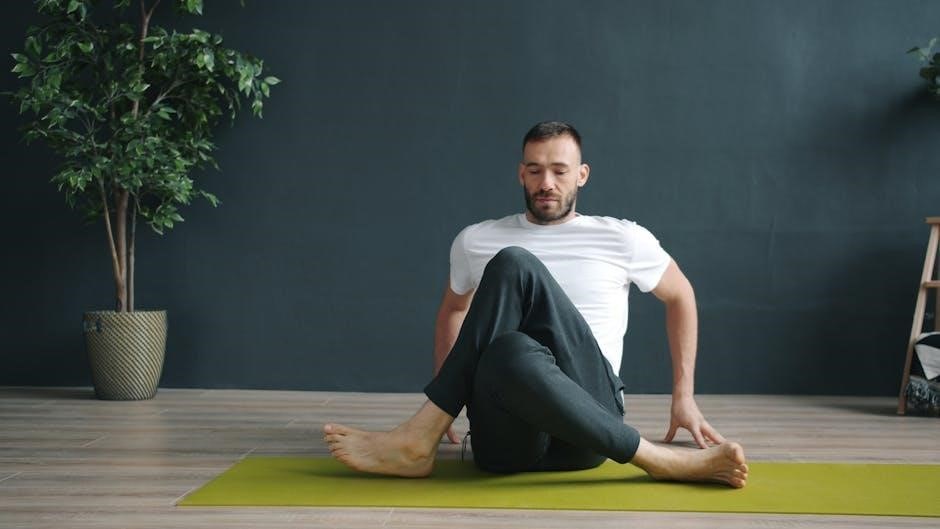
Accessing trustworthy online resources is crucial when seeking exercises for lumbar spinal stenosis. Several websites offer comprehensive guides and downloadable PDF programs designed by healthcare professionals. The National Institute of Neurological Disorders and Stroke (NINDS) provides foundational information about the condition‚ though not specific exercise routines.
The Mayo Clinic’s website delivers clear explanations of lumbar stenosis and general back pain management strategies‚ often linking to related exercise resources. WebMD also presents accessible articles and videos demonstrating appropriate movements.
Furthermore‚ dedicated physiotherapy and rehabilitation websites frequently host detailed exercise protocols‚ including those tailored for stenosis. Always prioritize sites affiliated with reputable medical institutions or professional organizations to ensure accuracy and safety. Remember to consult your doctor before starting any new exercise program.
Sample Exercise Programs (PDF Format)
Numerous PDF exercise programs specifically target lumbar spinal stenosis‚ offering structured routines for home practice. Many physiotherapy clinics and hospitals provide downloadable PDFs outlining core strengthening‚ nerve gliding‚ and flexibility exercises. Searching for “lumbar stenosis exercise PDF” yields results from institutions like the Cleveland Clinic and various university medical centers.
These programs typically include detailed instructions‚ illustrations‚ and modifications for different fitness levels. They often emphasize pelvic tilts‚ knee-to-chest stretches‚ and gentle back extensions – exercises designed to decompress the spinal canal.
However‚ it’s vital to remember that these are general guidelines. A personalized program‚ developed in consultation with a healthcare professional‚ is always recommended to address individual needs and avoid exacerbating symptoms. Prioritize programs from credible sources.
Long-Term Management and Prevention
Maintaining a healthy weight and practicing good posture are crucial for long-term spinal health‚ reducing strain and preventing stenosis progression.
Maintaining a Healthy Weight
Weight management plays a pivotal role in the long-term management of lumbar spinal stenosis. Excess weight places increased stress on the lumbar spine‚ exacerbating narrowing of the spinal canal and intensifying nerve compression. This heightened pressure can worsen symptoms like pain‚ numbness‚ and weakness in the legs and feet.

Reducing body weight alleviates this burden‚ potentially slowing disease progression and improving overall function. A balanced diet‚ rich in nutrients and low in processed foods‚ combined with regular physical activity‚ is essential. Even modest weight loss can yield significant benefits for individuals with lumbar stenosis‚ enhancing their quality of life and reducing reliance on pain medication or surgical intervention.
Good Posture and Body Mechanics
Proper posture and body mechanics are crucial for minimizing stress on the lumbar spine in individuals with spinal stenosis. Maintaining a neutral spine – avoiding excessive bending‚ twisting‚ or hunching – helps prevent further narrowing of the spinal canal and reduces nerve irritation.
When lifting objects‚ bend at the knees‚ keep your back straight‚ and hold the object close to your body. Avoid prolonged sitting or standing in one position; frequent changes in posture are beneficial. Ergonomic adjustments to workspaces can also significantly reduce strain. Consciously practicing these techniques throughout daily activities can contribute to long-term symptom management and improved spinal health.